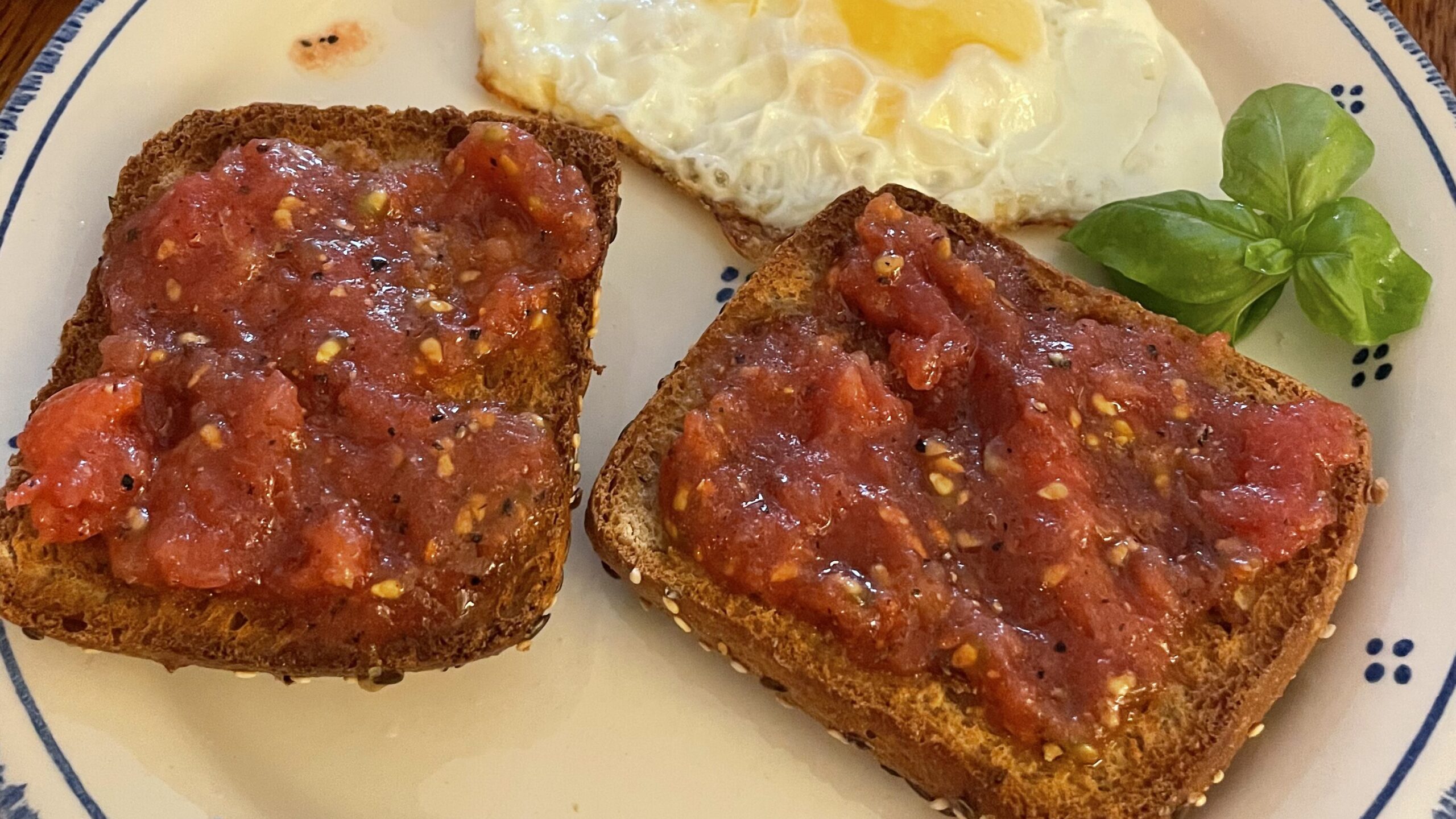
Pan con tomate with Körnerbrötchen, Thuringian tomatoes, and basil. Unorthodox? Yes, probably. But I don’t care much for food purism (Catalanes, come at me). Our version of pan con tomate is a bastardization of a bastardization. In the original Catalan pa amb tomàquet, the tomato is rubbed directly onto the toasted bread (along with garlic), which results in a much thinner layer of tomato. Though I found that version decent, I have to admit I prefer the version made in the rest of Spain, where a thicker layer of tomato pulp is used.
I first learned about pan con tomate while visiting my grandpa in Valencia. In Spain, supermarkets even sells the tomato pulp ready to spread, and surprisingly, it’s actually pretty good. Still, I think making it yourself is the way to go. Anyway, enough rambling; here’s how we do it:
Ingredients (makes four pieces)
- 4-5 medium tomatoes; or 2-3 large ones: (very ripe; cocktail, vine, or any flavorful variety)
- Extra virgin olive oil (to taste)
- Salt (to taste)
- Freshly ground black pepper (to taste)
- Bread (Whole-wheat rolls, baguette-like loaf, or any good-quality bread you particularly like)
- 1 clove garlic (optional)
- Fresh herbs for garnish (basil, chives, or parsley; optional)
We start with the tomatoes. You can use many different types (I just wouldn’t recommend cherry tomatoes). In this case we used cocktail tomatoes, which are a bit smaller but, compared to regular German tomatoes, are more flavorful. Meike and I often fantasize sun-kissed, abundantly flavored Mediterranean tomatoes, but we live in northern Germany, where tomatoes are like slightly crunchy acidic water. But I digress. The most important thing is that they’re very ripe. Take a handful and cut them in half. Then we’ll extract the pulp using a ceramic grater bowl (or a regular metal grater if that’s what you have). The process looks something like this:
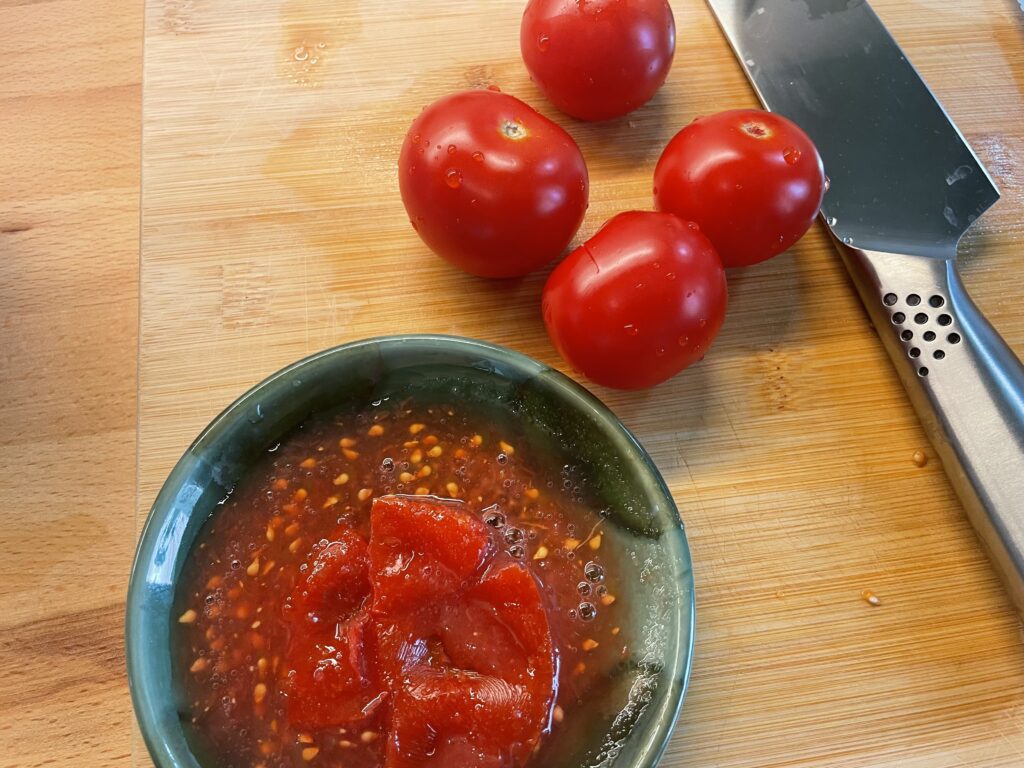
Once we’ve collected enough pulp in a separate bowl, we season it generously with high-quality extra virgin olive oil (we order Hojiblanca online from Spain), salt, and freshly ground black pepper — all to taste. When seasoned, the tomato pulp tends to darken slightly; this is completely normal.
Next, we’ll need some kind of bread (dealer’s choice). In Spain, they often use a baguette-like loaf cut in half, or sometimes thick slices of bread. I’d avoid using toast and go for something with a bit more character. In Germany, bread is amazing. I’m a big fan of Körnerbrötchen, essentially a whole-wheat roll covered in various seeds. We often buy the aufback version, which is sold frozen and can be made fresh in the air fryer or oven (five minutes at 150°C). It looks like this:
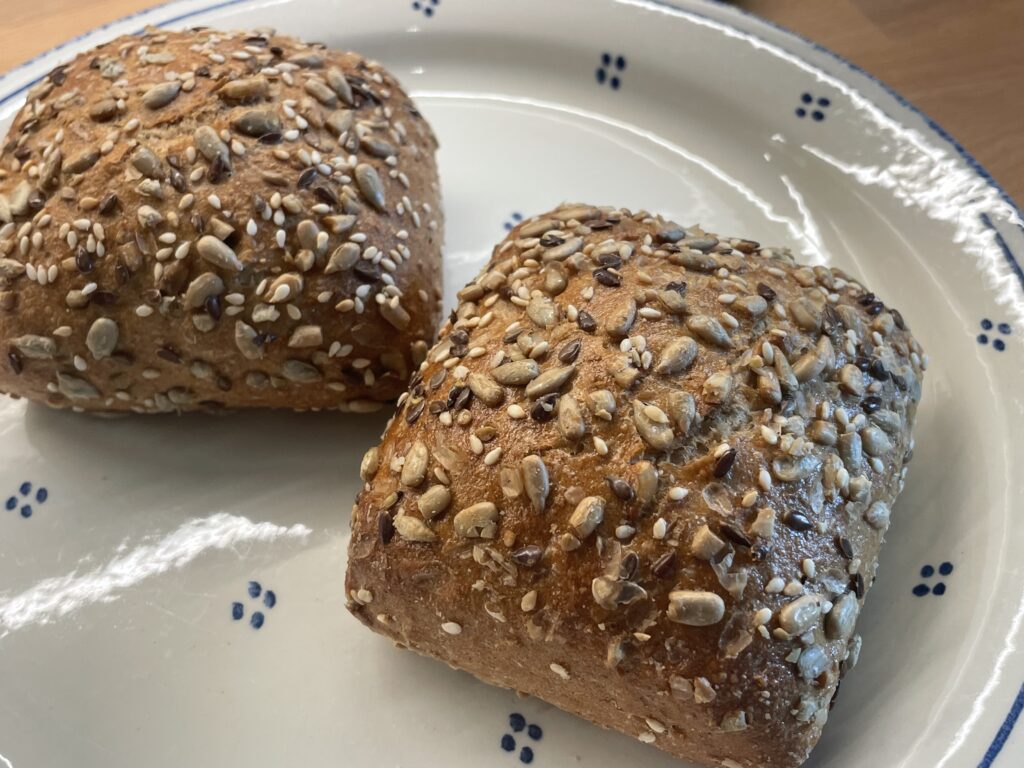
Cut the bread in half and toast the cut side; we put it back in the air fryer for two to three minutes at 200°C, but a pan, toaster, or oven works just as well. This part is a must! Otherwise, the tomato will soak right in and you’ll end up with a soggy mess.
Finally, assembly. I don’t always do this, but sometimes I like to remain true to the Catalan version and rub a cut clove of garlic lightly across the surface of the toasted bread. It gives a subtle hint of garlic without being overpowering. Then take your toasted halves and spread a generous layer of the seasoned tomato pulp on top. You can finish with a bit more olive oil and some fresh herbs. We often use basil or chives, and sometimes parsley. None of this is traditional, but remember, this is a bastardization of a bastardization.
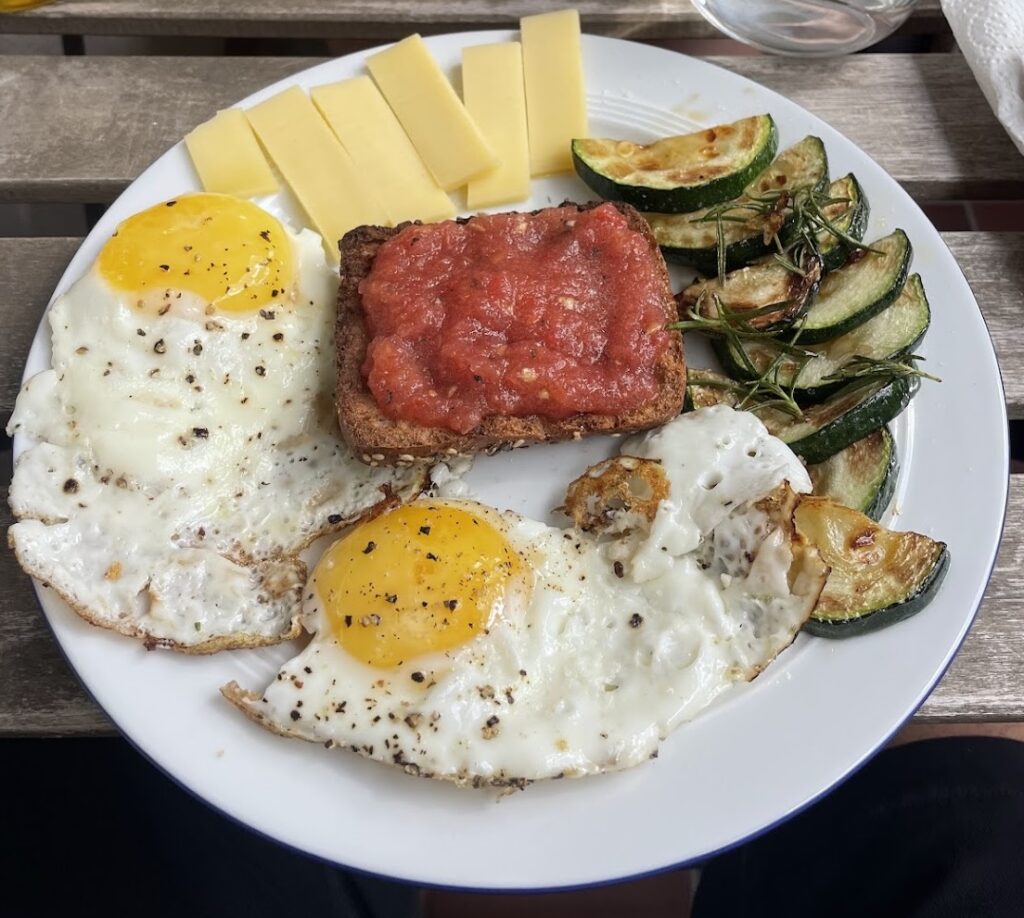
Enjoy it on its own, or with eggs, cheese, ham, roasted vegetables; the sky is the limit. I do recommend trying it plain at least once, so you can really savor the essence and simplicity of the tomato. That’s what I love about this dish; the few added ingredients — the salt, pepper, and olive oil — exist only to intensify the aroma and flavor of the otherwise humble tomato.